
A Fourth Grader on a College Campus
A Wednesday Night That Looks Different
Every Wednesday evening, while most fourth graders are finishing homework or watching television, 10-year-old Honey Cooper packs up her art supplies and heads to a college classroom.
Her destination is not an after-school club or tutoring session. Instead, Honey walks into a studio classroom at San Bernardino Valley College, where she takes a seat near the front of the room alongside students who are often twice her age.
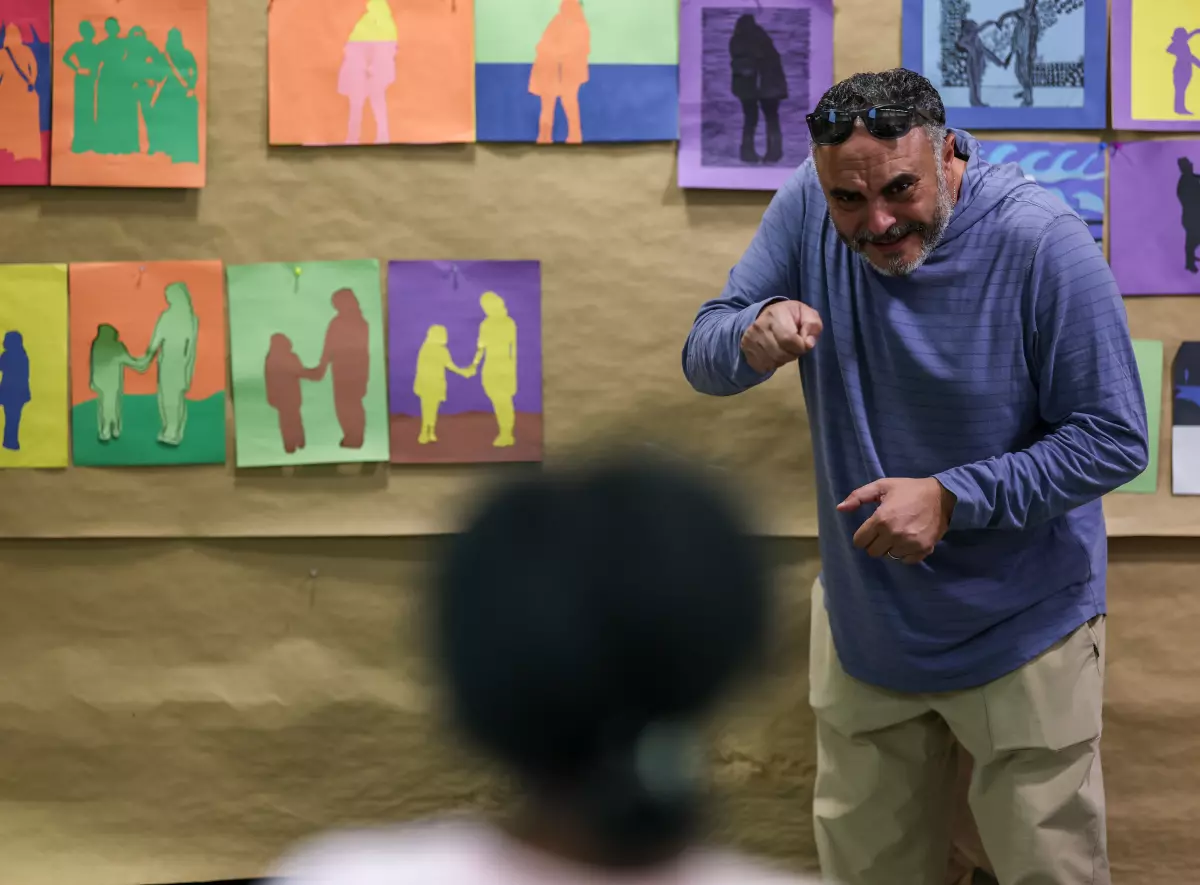
The San Bernardino elementary student is currently enrolled in ART 120: Two-Dimensional Design, a college-level course worth four credits. The class runs just like any other college course — lectures, critiques, projects, and a final portfolio.
The difference is that one of the students is still in the fourth grade.
Honey attends elementary school during the day at Kimbark Elementary School in San Bernardino. But by night, she becomes one of the youngest college students in the region.
A Rare Pathway Into College
Honey’s enrollment was made possible through California’s “special admit” policy, which allows K-12 students to enroll in community college classes if they demonstrate academic readiness.
While dual enrollment programs are common for high school students, cases involving elementary students are extremely rare.
Officials at San Bernardino Valley College say the policy allows qualified students to petition for admission regardless of age, as long as they receive parental permission and institutional approval.
Honey’s mother, Mia Cooper, helped guide the application process by submitting academic records, awards, and statements verifying her daughter’s academic readiness.
Her motivation was simple.
“Even though they might be young, they still need to be challenged,” Mia Cooper explained. “And this is a new way for them to be challenged.”
Support The Journal
Support local reportage that matters. Join Arias Pro for exclusive stories and adept insights.
SupportA Gifted Student With Big Curiosity
Honey is classified as a GATE student — California’s designation for Gifted and Talented Education participants.
Teachers say her academic ability stands out even among advanced learners. She reads at a high-school level and participates in Broadway Now, a performing arts program run through the San Bernardino City Unified School District.
District officials had noticed her intellectual curiosity long before the college class became a possibility.
Honey frequently accompanied her mother to school district meetings and education forums, quietly reading books in the back of the room while adults discussed policy.
Eventually, those moments caught the attention of district leadership.
One of them was Sandra Rodriguez, assistant superintendent for student services at the district.
After reading a news story about a young community college graduate who had started early, Rodriguez thought immediately of Honey.
“She could be the kid who could be a doctor by 20,” Rodriguez said.
That thought helped set the process in motion.
The Classroom Test
Before Honey ever stepped into the classroom, her professor had questions.
Nader Gergis, who teaches the design course, initially wondered whether a fourth grader could realistically keep pace with college-level material.
He decided early on that the curriculum would remain unchanged.
The expectations would be the same.
“I would not slow the class down,” he said.
So far, Honey has met the challenge.
Like every other student in the room, she is working toward a final design portfolio. Her assignments include projects exploring composition, line theory, and visual structure — foundational principles of art education.
One current project focuses on a family portrait collage, part of the class’s broader exploration of visual storytelling.
Finding Her Place Among Older Students
Despite the unusual setting, Honey says the experience has felt natural.
“I really like the college course,” she said. “We’re learning that lines can be anything.”
She says she gets along well with both her classmates and her professor. In critiques and studio sessions, she participates alongside the adult students without special treatment.
That approach was intentional.
Faculty believed Honey’s experience would be most meaningful if she were treated as a genuine student, not a novelty.
A Community College’s Original Mission
For college leaders, Honey’s enrollment represents something deeper than a single student success story.
Gilbert Contreras, president of San Bernardino Valley College, says the case reflects the founding philosophy of community colleges themselves.
“San Bernardino Valley College was founded on a simple belief,” he said. “Higher education should be accessible to anyone who is ready to learn, regardless of background, age, or circumstance.”
That mission has defined community colleges across California for decades.
But Honey’s case raises a new question:
How early can that access begin?
Opening Doors for Younger Students
District officials say Honey’s enrollment may become a test case for future programs.
After her course concludes in May, administrators plan to conduct a review examining what worked and what could be improved if other young students seek similar opportunities.
The goal is not to rush children into college.
Instead, educators want to explore whether exceptional learners in elementary school could benefit from limited exposure to advanced academic environments.
Rodriguez believes many young students are capable of more than traditional structures allow.
“Kids in elementary are very hungry for learning,” she said. “We want to give them opportunities and set them up on a college-ready track.”
A Small Story With Bigger Implications
For Honey Cooper, the experience may simply be the beginning of a long academic journey.
But for educators in San Bernardino, the moment carries broader meaning.
It represents a quiet experiment in how education systems can evolve — expanding opportunities not just for high schoolers, but potentially for gifted students much earlier in life.
For now, the fourth grader still wakes up each morning, boards the bus to elementary school, and spends the afternoon reading at home.
Then, once a week, she walks into a college classroom.
And sits down to learn.